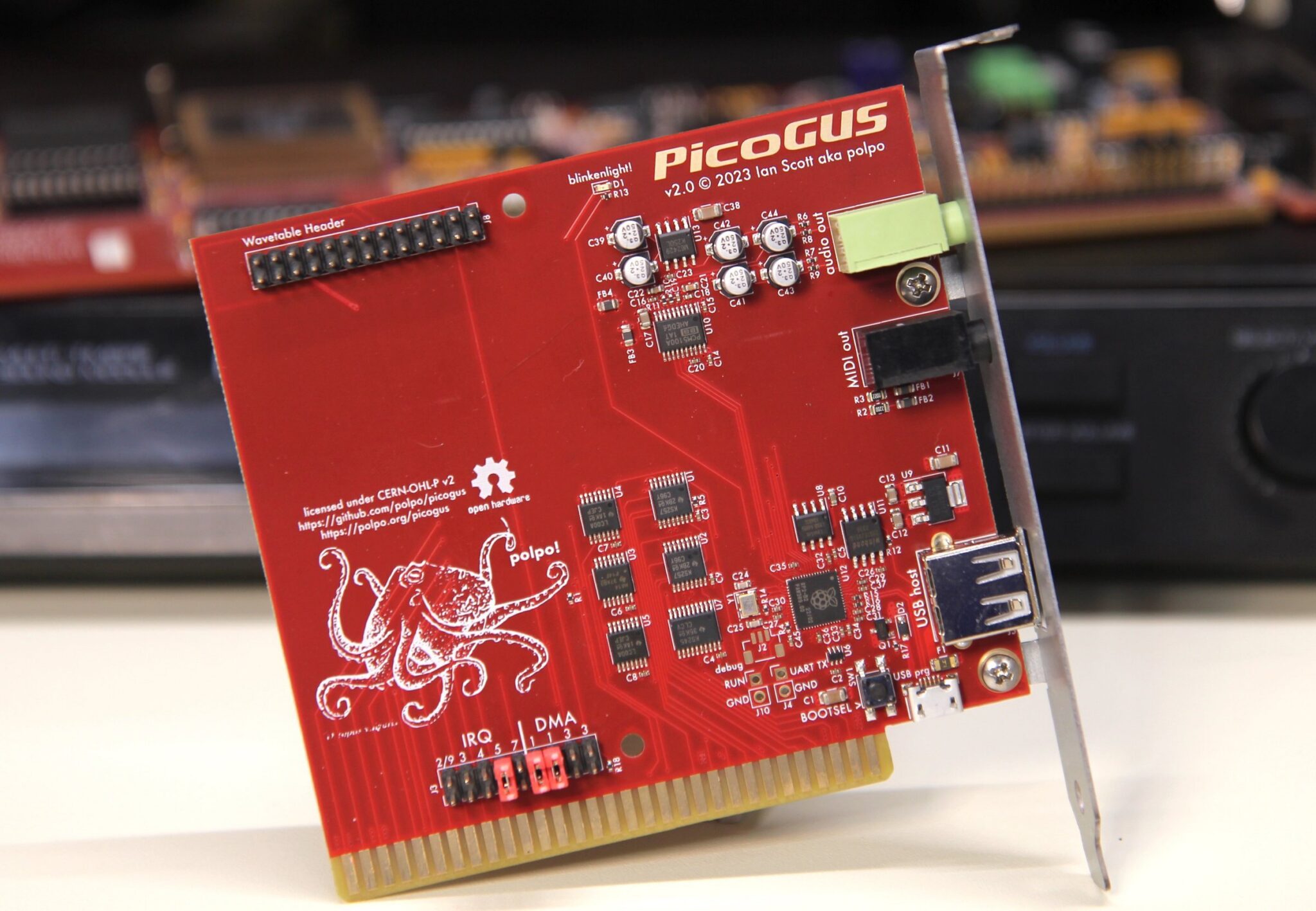
Ian Scott, better known online as polpo, has become a familiar name for vintage PC fans who want clever new hardware that still respects old machines. His PicoGUS project recreates the experience of a Gravis Ultrasound ISA sound card with the help of the small Raspberry Pi Pico family, while his newer PicoIDE project brings drive-image convenience to old PCs through IDE hard drive and ATAPI optical disc emulation. Both projects sit in that sweet Z-retro zone where modern parts help keep older computers useful, playful, and easier to enjoy.
The story behind these projects starts long before circuit boards, firmware builds, and Crowd Supply backers. Polpo traces his interest in computers back to kindergarten, when he first sat in front of an Apple II. The magic was simple but powerful: he pressed keys, and the machine responded. Because there was no computer at home, any chance to use one mattered. School computer labs and friends’ houses became the places where that early curiosity could keep growing.
A few years later, that curiosity shifted from simply using computers to wondering what made them work. That question eventually became a long chain of small experiences. Polpo describes himself as an information sponge, the sort of person who collects useful fragments over time until a difficult project starts to feel possible. By the time the idea of building a sound card or drive emulator came along, those fragments had added up enough for him to think he might actually be able to do it.
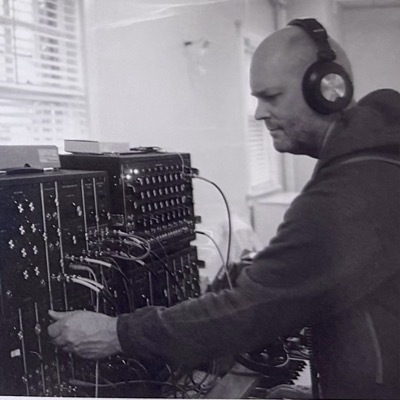
His formal background helped, but it was not the whole story. Polpo has a computer engineering degree, yet before PicoGUS and PicoIDE he had only treated hardware development as a hobby, and not at the depth these projects required. As he became more involved with vintage computers, he found himself wanting devices that did not exist in exactly the form he imagined. Rather than wait for someone else to build them, he started turning that gap into a learning path, digging deeper into hardware and firmware as the projects demanded it.
That kind of work takes time, and time has been one of the harder parts of the process. Polpo has a demanding day job and normal family obligations, so development has often happened in the margins. A lot of the progress came from late nights, helped by the fact that he can usually manage with limited sleep. He does not frame that as effortless balance; he presents it more honestly as a price he has chosen to pay because the community response to PicoGUS, and later PicoIDE, made the effort feel worthwhile.
Why PicoGUS Happened
PicoGUS began with a practical vintage PC problem: the original Gravis Ultrasound is desirable, but it can be expensive. Polpo saw retro streamers on Twitch talk about wanting a GUS while also being unable to justify the going market price. Used cards on eBay could climb into the multiple hundreds of dollars, putting the real hardware out of reach for many people who simply wanted to hear software and games the way they remembered, or the way they had always wanted to experience them.
The first idea was built around emulation. DOSBox already had strong Gravis Ultrasound emulation, and a Raspberry Pi seemed powerful enough to run that emulation while also offering GPIO pins that could interface with a vintage PC’s ISA bus. The goal was not just to make something cheaper. A new card could also be easier to obtain, easier to reproduce, and less dependent on fragile original hardware that continues to rise in price as supplies shrink.
The move toward the Raspberry Pi Pico came through community discussion. After making progress with a Raspberry Pi approach, polpo posted about the project on Vogons, a forum well known among vintage PC enthusiasts. A user there raised the possibility that the Raspberry Pi Pico, with its PIO state machines and external PSRAM, might be able to handle Gravis Ultrasound emulation. That suggestion landed at the right moment. The Covid-era parts shortage was making availability a serious issue, and the Pico offered a path built around a small, accessible board.
Nearly four years later, polpo still enjoys working on PicoGUS. Even while PicoIDE has taken much of his attention, a pause while hardware production ramped up gave him a reason to return to the PicoGUS codebase. That led back to Sound Blaster 16 support, a feature he had started a couple of years earlier. A helpful discovery by a PicoGUS collaborator made that work more realistic: DOSBox’s original OPL3 emulation could help support the Yamaha OPL3 FM synthesis used by the SB16.
That SB16 work has now reached the point where polpo describes it as feature complete. PicoGUS is still not frozen in place, though. A recent community contribution improves joystick support and adds interactive button remapping, and polpo would like to bring that in now that the SB16 feature work is done. He is also interested in support for rare sound cards such as the AdLib Gold and the Mindscape Music Board. Recent code changes have freed up meaningful CPU time and memory, which may make additional emulation targets more realistic.
What PicoIDE Adds
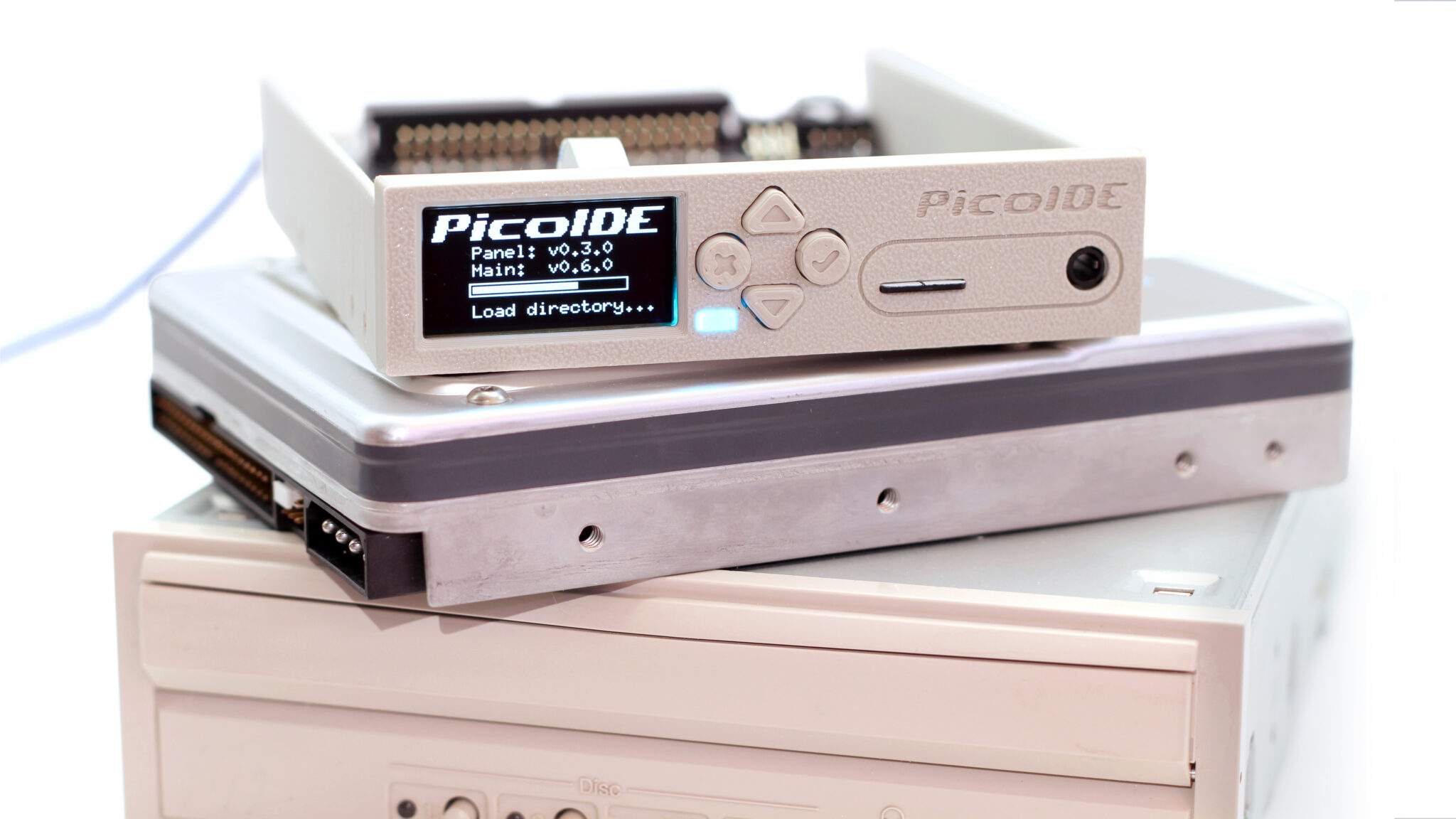
PicoIDE takes the same spirit of modern help for old computers and applies it to storage. The device fits into a 3.5-inch drive bay and can currently emulate IDE hard drives and ATAPI optical discs by using drive images stored on a microSD card. That means an older PC can work with image files instead of relying only on aging mechanical drives or physical optical media. For anyone who maintains DOS-era or related machines, that is a very practical kind of convenience.
The deluxe version adds a more finished front-panel experience. It includes a 1.3-inch OLED screen, silicone buttons described as having a good feel, and a WiFi interface. That wireless connection can be used for choosing which drive images are loaded, upgrading firmware, and even uploading new images. The hardware is housed in an injection-molded ABS plastic case, with color options that include a classic computer beige look and a black version. It is modern hardware, but visually it is clearly meant to live comfortably inside an older PC case.
The idea for PicoIDE came partly from questions about whether PicoGUS could emulate an IDE or ATAPI drive. Since IDE is closely related to ISA, the concept seemed plausible. The problem was that the RP2040 did not appear to have enough capability to handle IDE emulation by itself. When Raspberry Pi introduced the RP2350, with stronger CPU cores and more GPIOs, polpo did the rough math and found that IDE and ATAPI emulation looked possible. That new chip shifted the project from an interesting thought into something worth building.
There is also room for the community to take PicoIDE in directions beyond the original device. Polpo notes that some people are already thinking about combining PicoIDE with a Gotek-style setup, using the same OLED display and buttons to control both. Once units are on the way to PicoIDE backers on Crowd Supply, he plans to release the hardware and firmware designs under open source licenses. That matters because PicoGUS already showed how creative people can be once they have a design they can study, modify, and extend.